Frosted vs Reflective Window Film: What Is the Difference?
Frosted window film obscures views through the glass during both daytime and night-time, whereas reflective film creates a mirrored appearance that provides privacy mainly when it is brighter outside than inside. Both can be effective, but they solve different privacy challenges.
How Does Frosted Privacy Window Film Work?
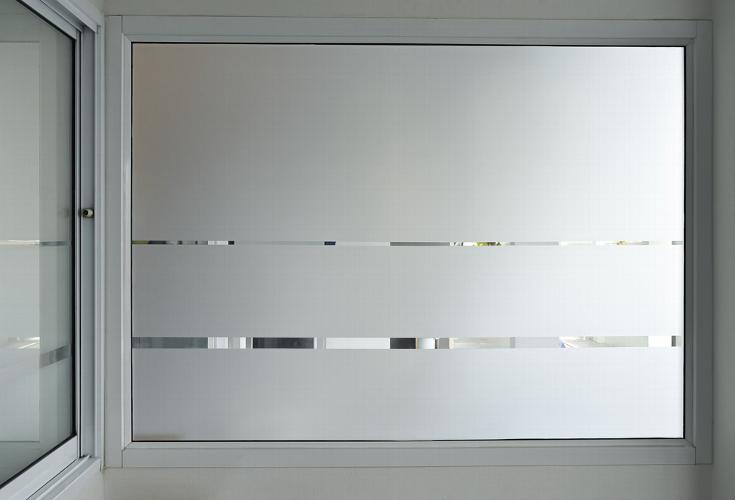
Frosted privacy window film creates a translucent, etched-glass effect. It prevents clear views through the glass while still allowing useful levels of daylight into the room.
Key benefits include:
- Privacy from both sides of the window
- Diffused natural light rather than a fully blacked-out appearance
- A choice of opacity levels, decorative patterns and frosted finishes
- A clean alternative to net curtains, blinds or permanent etched glass
- Suitable for bathrooms, offices, meeting rooms, internal partitions and street-facing windows
At Sunshield Window Films, we often recommend frosted finishes where clients need privacy window film you cannot easily see through, without making a room feel enclosed.
How Does Reflective Privacy Window Film Work?
Reflective privacy window film has a mirrored or tinted surface. During daylight, when the exterior is brighter than the interior, the glass appears more reflective from outside. Occupants can usually retain a clearer view out than they would with frosted film.
Reflective films are available in varying shades, reflectivity levels and visible light transmission levels. Depending on the product selected, they may also offer solar control benefits, including reduced glare, solar heat gain and UV exposure.
Typical uses include:
- Residential windows overlooking roads or neighbouring homes
- Office glazing and external meeting-room windows
- Shopfronts and commercial premises
- Glazing affected by strong sunlight and glare
Frosted vs Reflective Privacy Film Comparison
| Feature | Frosted film | Reflective film |
|
Daytime privacy |
Yes |
Yes, with suitable lighting |
|
Night-time privacy |
Yes |
Not reliably |
|
Clear outward view |
No |
Usually, in daylight |
|
Natural light |
Diffused |
Varies by film |
|
Heat reduction |
Not its main purpose |
Available with solar control films |
|
Appearance |
Etched, translucent or frosted |
Mirrored or tinted |
|
Best application |
Continuous privacy |
Daytime privacy and view retention |
Our Privacy Window Film Options
What Is the Best Window Film for Privacy During the Day and at Night?
Frosted window film is generally the best option for privacy during the day and at night because it keeps the view obscured regardless of whether lights are on inside. Reflective film depends on the balance of light on each side of the glass.
Why Is Frosted Window Film Better for 24-Hour Privacy?
Frosted film does not rely on daylight to work. This makes it a dependable option for rooms that are overlooked by neighbours, pedestrians or nearby buildings.
It is particularly useful where:
- Interior lights are regularly used in the evening
- Windows face pavements, gardens or neighbouring properties
- Curtains or blinds are not wanted during the day
- Natural light is still important
- Privacy is needed in bathrooms, bedrooms, treatment rooms or offices
Frosted finishes reduce identifiable detail. However, it is important to remember that some silhouettes can remain visible where a person stands very close to the glass with strong lighting behind them.
Can Reflective Window Film Provide Privacy at Night?
Reflective film does not reliably provide privacy after dark. When lights are on inside and it is darker outdoors, the reflective effect can reverse, allowing people outside to see more clearly into the property.
This is why one-way mirror window film should not be treated as a guaranteed 24-hour privacy solution. If night-time screening matters, you may need:
- Curtains or blinds alongside reflective film
- Frosted window film
- Higher-opacity or opaque privacy film
- A combination of frosted lower panels and clear upper glazing
What Window Film Provides Privacy Without Blocking Natural Light?
Both frosted and reflective films can preserve natural light, but in different ways. Frosted film diffuses incoming daylight, while reflective film can retain a clearer outward view during daytime conditions.
A lighter frosted film can brighten a room with softened light, whereas denser products offer greater obscurity. Partial coverage is another practical option: applying frosted film to the lower half of a window can screen passers-by while leaving the upper portion clearer.
What Is the Best One-Way Mirror Window Film for Daytime Privacy and Heat Control?
Reflective solar control window film is usually the best choice for one-way daytime privacy and heat control, provided it is compatible with the existing glazing. It can maintain a view out while reducing the intensity of sunlight, glare and unwanted solar heat.
How Does One-Way Mirror Window Film Create Daytime Privacy?
One-way mirror film works because of lighting differences. When daylight outside is brighter than the interior, the external face of the glass looks reflective, making it harder to see into the building.
From inside, occupants can generally see out through the window. However, this effect changes with conditions:
- It may be weaker during dull weather
- It reduces at dawn and dusk
- It can reverse when lights are switched on indoors
- Privacy levels vary by the film's reflectivity and light-transmission specification
For this reason, reflective privacy window film for houses is often best for rooms used mainly in daylight, such as living rooms, kitchens and home offices.
Can Reflective Window Film Reduce Heat and Glare?
Yes. Certain reflective solar control films can reduce the amount of solar energy passing through glazing. This can make sunny rooms more comfortable and reduce glare on television screens, computer monitors and office workstations.
Potential benefits include:
- Reduced glare in offices and homes
- Improved comfort in south- or west-facing rooms
- Reduced UV exposure that can contribute to fading
- A more consistent internal environment near windows
The amount of heat reduction depends on the technical performance of the chosen product, the orientation of the glass and the construction of the glazing. We assess these factors before recommending a film.
Which One-Way Window Film Is Best for Homes and Offices?
For homes, the best window film for privacy is often a film that balances daytime screening, retained views and good levels of natural light. For offices, reflective solar films can offer privacy, glare control and improved comfort near large glazed areas.
Commercial buildings may require a more detailed assessment. Privacy requirements, external appearance, internal lighting and glass type should all be considered before installation.
Can You See Through Frosted Window Film at Night?
You generally cannot see clearly through correctly selected frosted window film at night, even with internal lights on. However, shadows or silhouettes may be visible if a person or object is very close to the glass and strongly lit from behind.
Can People Outside See Silhouettes Through Frosted Glass?
Frosted film obscures detail rather than blocking all light. Someone outside should not be able to see a clear face, clothing or activity through the glass, but they may notice movement or outlines in certain conditions.
Silhouettes are more noticeable when:
- A person stands close to the window
- Interior lighting is bright
- The selected film has a lighter opacity
- The glass is viewed from a short distance
Where complete visual screening is necessary, a denser frosted finish or an opaque film may be more appropriate.
Is Frosted Window Film Suitable for Bathroom and Bedroom Windows?
Yes. Frosted window film is an excellent option for bathrooms, en-suites, overlooked bedrooms and ground-floor windows. It provides dependable privacy without requiring blinds to remain closed throughout the day.
Full-window coverage offers the highest level of screening. Alternatively, a partial frosted design can cover the most overlooked areas while preserving a clearer section for daylight or views.
What Are the Disadvantages of Frosted Window Film?
The main disadvantages of frosted window film are the loss of a clear outward view, reduced visual transparency and the possibility of silhouettes appearing in strong lighting conditions. It is highly effective for privacy, but it is not always right for every room.
Does Frosted Window Film Block Your View Outside?
Yes. Frosted film obscures views in both directions. That is its main privacy benefit, but it can be unsuitable where you want to enjoy a garden view, monitor a driveway or retain an open feel in a living room.
A practical alternative may be:
- Frosted film on lower window sections only
- Decorative bands or manifestations
- Reflective film for daytime privacy
- Blinds or curtains used alongside clear glazing
Does Frosted Window Film Make Rooms Darker?
Translucent frosted films still allow daylight to pass through, although the light becomes softer and more diffused. A room may feel different because you lose a clear view outside, but it does not necessarily become significantly darker.
Opacity, film colour and product specification all affect light transmission. We recommend reviewing samples against your own glazing before choosing a final finish.
Is Frosted Window Film Easy to Clean and Maintain?
Frosted film is straightforward to maintain. Use a soft cloth with a suitable non-abrasive cleaning product, and avoid rough pads, harsh chemicals or sharp tools that could mark the surface.
Always follow the manufacturer's curing and aftercare guidance, particularly after a new installation. Patterned or decorative films should be cleaned gently to preserve their finish.
Is Privacy Window Film Bad for Windows or Double Glazing?
Privacy window film is not inherently harmful to windows or double glazing. However, an unsuitable film can increase solar absorption and thermal stress in certain glazing types, so the film must be matched carefully to the existing glass construction.
Can Privacy Window Film Damage Double-Glazed Windows?
The suitability of film depends on factors including the type of glass, its condition, coatings, pane size, frame system and exposure to sunlight. Solar films can change how heat is absorbed and distributed through the glazing.
This does not mean film is unsafe for double-glazed windows. It means professional film selection is important, particularly for:
- Older double glazing
- Coated or low-emissivity glass
- Toughened or laminated units
- Large commercial panes
- Windows with partial shade or uneven sunlight
Can Reflective Window Film Cause Glass to Crack?
Some film-and-glass combinations may increase thermal stress, which can contribute to cracking in unsuitable circumstances. The risk is not caused by every reflective film; it depends on the existing glazing and the selected product.
A professional assessment helps identify potential concerns before installation. This is especially valuable for large windows, sealed units and commercial glazing where replacement costs can be significant.
Does Frosted Window Film Come Off Easily and Can It Be Removed Without Damaging Glass?
Professionally installed frosted window film is designed to remain securely in place during normal use, but it can usually be removed from compatible glass with the correct tools and techniques. Removal should be carried out carefully to protect the glass and surrounding finishes.
How Long Does Frosted Privacy Window Film Last?
Longevity depends on product quality, installation standards, window orientation, environmental exposure and ongoing care. Professional architectural films are generally more durable than temporary DIY privacy products.
Over time, lower-quality films may be more likely to peel, bubble, discolour or lift at the edges. Choosing a suitable product and following manufacturer care guidance are important for long-term performance.
Can Privacy Window Film Be Removed or Replaced?
Many adhesive window films can be removed using controlled heat, moisture and appropriate removal products. Adhesive residue may remain and needs to be cleaned away carefully.
For large panes, older films, coated glass or specialist glazing, professional removal is recommended. This reduces the risk of scratching the glass or damaging seals, frames or surface coatings.
What Is the Best Window Film for Privacy in Different Rooms and Buildings?
The best window film for privacy depends on how the space is used, the level of overlooking and whether a clear outward view is required. A bathroom needs different performance from a living room, shopfront, office partition or healthcare consultation room.
Best Privacy Window Film for Living Rooms and Street-Facing Windows
For living rooms, reflective film can be useful for daytime privacy if retaining a view outside is important. However, blinds or curtains are still needed for evening privacy.
For street-facing windows, frosted lower panels can help stop people looking in while leaving upper glazing clear. Decorative films are also popular for front doors, sidelights and entranceways.
Best Privacy Window Film for Bathrooms and Bedrooms
Frosted film is normally the best option for bathrooms and bedrooms because it provides privacy during both daytime and night-time. Higher-opacity products can be selected for particularly overlooked windows.
It can provide the appearance of etched glass without replacing the existing pane. This makes it suitable for en-suites, shower rooms, lower-floor bedrooms and properties close to neighbouring homes.
Best Privacy Window Film for Offices and Meeting Rooms
Frosted window film is ideal for confidential meeting rooms, internal glass partitions and private office areas. It can be installed as full coverage, bands or bespoke manifestations to support both privacy and visual branding.
For external office windows, reflective solar control films can help with daytime privacy and glare management. This can improve comfort for staff working near screens and large expanses of glazing.
Best Privacy Window Film for Shops and Commercial Buildings
Commercial premises may need a mixture of privacy, customer visibility, solar control and safety considerations. Reflective film can suit appropriate external glazing, while frosted film works well for consultation rooms, treatment spaces, staff areas and private offices.
Sunshield Window Films can assess practical requirements across offices, retail spaces, schools, healthcare facilities and other commercial properties throughout Birmingham, the West Midlands and wider UK locations.
How Much Does Frosted or Reflective Privacy Window Film Cost in the UK?
The cost of privacy window film installation in the UK varies according to the film selected, total glass area, number of panes, access requirements and glazing complexity. A small bathroom window will naturally differ in cost from a large office or commercial installation.
What Affects the Cost of Privacy Window Film Installation?
Main pricing considerations include:
- The size and number of windows
- Frosted, decorative, reflective or solar-control film specification
- Required performance features
- Window access, including upper-storey work
- Preparation work and cleaning requirements
- The type and condition of the glazing
- Whether bespoke designs or cut graphics are required
A site survey allows installers to provide an accurate recommendation and quotation rather than relying on a generic price.
Is Professional Privacy Window Film Worth It Compared with DIY Film?
Professional installation can offer better material quality, cleaner finishing and more confidence that the product is appropriate for the glass. DIY film may appear cost-effective initially, but poor application can lead to bubbles, creases, visible edges and premature lifting.
Professional installers also measure accurately, prepare glass correctly and assess glazing compatibility. For larger projects, see our Residential Window Films and Commercial Window Films services.
What Is the Best Window Film for Privacy? Our Final Recommendation
What is the best window film for privacy? Frosted film is generally the strongest choice for continuous privacy, while reflective solar control film is preferable for daylight privacy, retained views and potential heat reduction. The ideal choice comes down to when privacy is needed most.
Choose Frosted Window Film If You Need:
- Privacy throughout the day and evening
- Obscured glazing in bathrooms, bedrooms or meeting rooms
- An etched-glass appearance without replacing glass
- Natural light without clear visibility through the window
- A reliable solution for overlooked or street-level windows
Choose Reflective Window Film If You Need:
- Daytime privacy while retaining an outward view
- Reduced glare from strong sunlight
- A mirrored or tinted external appearance
- Potential solar heat reduction
- A solution for suitable home, office or commercial glazing
When Should You Ask a Professional Window Film Installer?
Professional advice is particularly important when glazing specifications are unknown, when you need to balance privacy with light and heat control, or when windows are large, high-level or commercial.
Sunshield Window Films takes a considered approach to film selection, helping ensure the recommended product suits the room, lighting conditions, appearance requirements and glass type.
Get Expert Advice on Privacy Window Film Installation from Sunshield
Sunshield Window Films provides professional residential and commercial window film installation from Sutton Coldfield, serving Birmingham, the West Midlands and wider UK locations. We can help you compare frosted, decorative and reflective solar-control options based on your privacy needs, daylight levels and existing glazing.
Whether you need dependable bathroom privacy, a confidential office partition or reflective film for a sunny commercial space, our team can recommend a suitable solution.
Our Privacy Window Films Enquire Now

