
Bronze 20 Window Film for Office Heat and Glare Control
South-facing office windows bring valuable daylight into a workspace, but they can also allow substantial solar heat to enter. Even in a brick-built building with a well-insulated roof, sunshine through the glazing can contribute to uncomfortable temperatures.
Bronze 20 solar control window film helps reduce this incoming solar energy. It also reduces glare and UV exposure, with a bronze finish that changes the appearance and daylight transmission of the glass.
Sunshield Window Film Ltd explains what the performance figures mean using an illustrative office example.
The office example
The example in our customer presentation uses:
A 600 ft² room, approximately 55.7 m²
Six window sets, each measuring 2 m × 1 m
A total glass area of 12 m²
South-facing windows in the West Midlands
Clear, air-gap double glazing approximately 15 years old
Brick construction and a well-insulated pitched tiled roof
The glazing's age alone does not establish its solar performance. Its construction and any coatings need checking before calculating a reliable comparison.
Bronze 20 performance figures explained
The supplied product data for Bronze 20 on reference 4/16/4 mm double glazing lists:
Performance measure
Reference value
Total solar energy rejected 65%
Glare reduction 76%
UV rejection More than 99%
Visible-light transmission 20%
g-value 0.35
These figures apply to the specified reference glazing. Actual performance depends on the glass and installation.
65% total solar energy rejected describes the proportion of incoming solar energy that does not become inward solar heat gain under the reference conditions. It does not mean a 65% reduction in room temperature or energy bills.
The g-value of 0.35 means approximately 35% of incident solar energy contributes to heat gain inside, including secondary heat transfer from energy absorbed by the glazing.
How much solar heat could enter the office
Solar heat gain depends on the glass area, the sunlight falling on it and the glazing's g-value.
For this example, we assume an untreated g-value of 0.70 solely to illustrate a comparison. This is not a verified value for the existing windows.
Sunshine on glass - Before assumed g = 0.70 - With film reference g = 0.35 Reduction in example
500 W/m² - 4.20 kW - 2.10 kW = 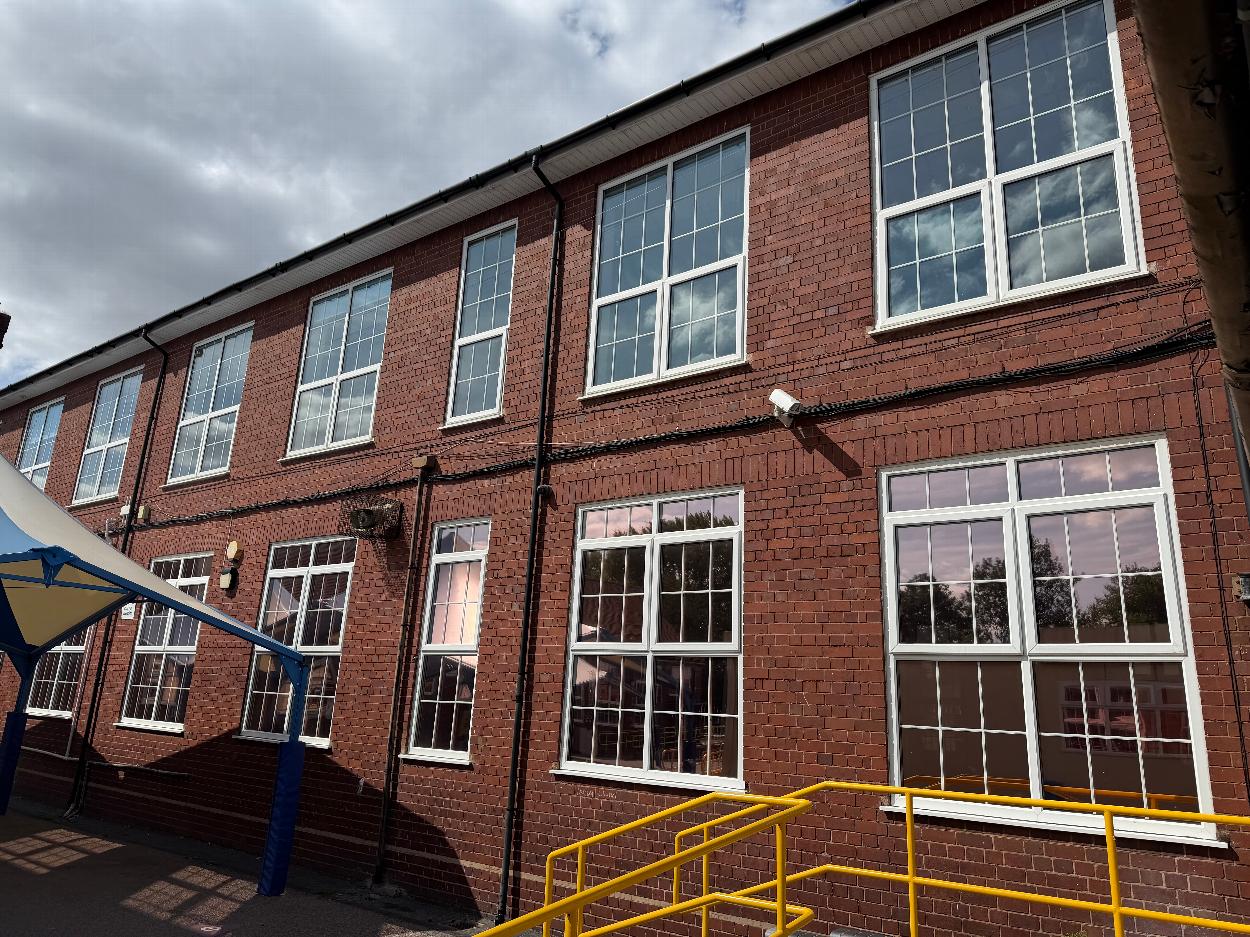 2.10 kW
700 W/m² - 5.88 kW - 2.94 kW = 2.94 kW
At the stronger illustrative exposure, the film reduces incoming solar heat by 2.94 kW compared with the assumed untreated glazing.
These sunshine levels are calculation scenarios, rather than a forecast for a particular West Midlands day.
Less heat accumulating during a sunny period
Solar heat builds up over time. Sunlight warms floors, desks and other internal surfaces, which store energy and release it later.
If the 12 m² of glazing receives an average of 500 W/m² for five hours, the illustrative calculation gives:
Before filming: 21.0 kWh of solar heat entering, using the assumed g-value of 0.70
With Bronze 20: 10.5 kWh, using the reference g-value of 0.35
Difference: 10.5 kWh less solar heat entering during that period
Reducing this input can help slow the room's temperature rise and reduce the heat available to accumulate in the building fabric.
The 10.5 kWh figure represents avoided heat input. Electricity savings depend on whether cooling equipment is used, its efficiency and how it operates.
Why a well insulated roof does not prevent all overheating
Roof insulation restricts heat transfer through the roof. It does not stop sunlight entering through windows.
Solar control film addresses that separate source of heat. Where a room has a substantial area of sun-exposed glazing, reducing solar gain can complement the building's existing insulation.
The resulting temperature change depends on ventilation, shading, occupancy and equipment heat. A site assessment is needed before predicting a specific reduction in degrees Celsius.
Glare reduction and UV protection
The reference 76% glare reduction can help reduce visual discomfort from bright glazing.
More than 99% UV rejection also helps limit UV-related fading of furnishings and finishes. Visible light and heat can still contribute to fading, so UV protection does not prevent every form of deterioration.
Daylight and bronze appearance
Bronze 20 provides strong solar control with a noticeable bronze finish. Its reference 20% visible-light transmission means the room will receive less daylight through the treated glazing.
Choosing the right film involves balancing heat and glare control against the desired brightness and appearance. Viewing a sample helps assess the finish before installation.
[Insert illustrative office layout image]
Illustrative office layout showing desks, a meeting area and sun-exposed windows. It is not a measured plan of the customer's premises.
[Insert interior before and after installation photographs]
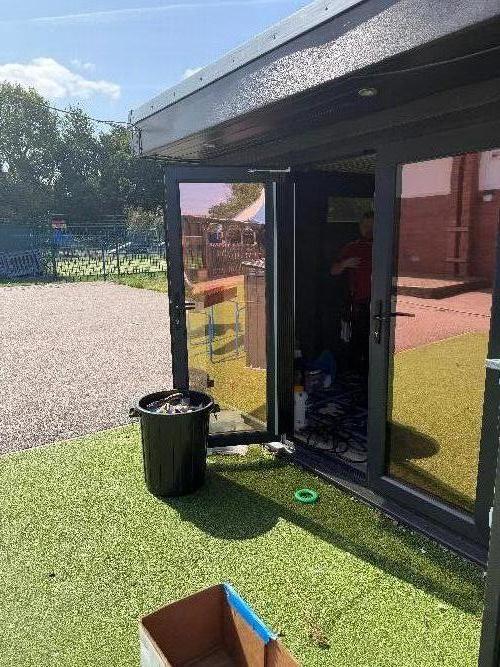
Installation photographs show the change in appearance. Lighting, camera exposure and viewpoint differ.
[Insert exterior installation photographs]
Exterior views show Bronze 20 during partial installation and following completion.
Choosing solar control film for your office
Before specifying a film, Sunshield can assess the glazing and discuss the room's exposure, shading and daylight needs.
Glass compatibility matters because solar control film changes how the glazing transmits, reflects and absorbs energy. The final specification should suit the existing glass construction.
Contact Sunshield Window Film Ltd
Discuss Bronze 20 solar control film for your office or commercial premises with Sunshield.
Telephone: 0800 002 5404
Local telephone: 0121 238 3449
Email: hello@sunshieldwindowfilm.co.uk
Unit 1–2, 17 Reddicap Trading Estate
Sutton Coldfield
West Midlands
B75 7BU
Frequently asked questions
Does Bronze 20 window film reduce office temperature by 65%?
The 65% figure describes total solar energy rejected under reference conditions. The change in room temperature depends on the building, weather, ventilation and other heat sources.
How much heat could window film reduce through 12 m² of glass?
In the example above, at 700 W/m² of incident sunshine, solar heat gain falls from 5.88 kW to 2.94 kW. This uses an assumed untreated g-value of 0.70 and the filmed reference g-value of 0.35.
Can solar control film help a south-facing office?
It can reduce solar heat entering through compatible glazing. The benefit depends on the amount of sunshine reaching the windows and the room's existing conditions.
Will Bronze 20 make the office darker?
Yes. Its reference visible-light transmission is 20%, so daylight and appearance should form part of the product selection.
Hashtags for sharing
#SunshieldWindowFilm #Bronze20 #SolarControlWindowFilm #OfficeWindowFilm #HeatReduction #GlareReduction #UVProtection #CommercialWindowFilm #WestMidlands #SuttonColdfield

